Saturday, December 7, 2013

"The Historic Stebbins House: R.I.P.", by Larry Reed

Stebbins House “Windermere” circa 1890


The historic Stebbins House, a mile east of Cooksville, was demolished by the owner on November 27, 2013.  The1850 limestone Federal-Greek Revival style farmhouse was an important part of the “Historic Resources of the Cooksville Area” listed in the National Register of Historic Places in 1980.

The elegant and impressive farmhouse was significant both for its architectural value and for its role in the history of the Town of Porter with its association with Harrison Stebbins, a prominent early settler in the 1840s.
Stebbins House, 1850-2013

For a number of months, the Historic Cooksville Trust had been working with the owner who wanted to remove the house from his property. The Trust undertook an effort to find a new owner and a new location for the historic house. Several potential new owners and new locations were identified.

In early November 2013 a very interested person agreed to accept the house and move it to a new location. The new site required the house to be moved across either one of two bridges over the Badfish Creek enroute to its new location, and, unfortunately, it was determined by the Wisconsin Department of Transportation that neither of the bridges could support the weight of the heavy stone house. That meant a new prospective owner and a new site were needed.

Another plan was then quickly developed by the Historic Cooksville Trust to save the house by moving it to a different location, without any bridges to cross, under new ownership. But the owner decided he could not wait another week or two and was determined to demolish the house immediately, before winter, so that “the hole could be filled in and grass planted before winter.”

The plan—and hope— to relocate the house and preserve it for future generations as part of Wisconsin’s and the Town of Porter’s heritage was not to be realized. The house was demolished.

The lesson is—and it is a not a new one— that it takes patience, perseverance and persistence, as well as a sense of the importance of our heritage and a commitment to preserving it, when historic buildings are threatened with destruction.

Once gone, they are gone forever.

The Stebbins House: R.I.P. And, as some say, “Rest In Pieces.”


            [For more information on historic preservation and the Historic Cooksville Trust, contact Larry Reed (608) 873-5066.)

.

 
.


.


Tuesday, December 3, 2013

Stoughton Chamber Singers Concert, Sunday, December 8, 2013


The Stoughton Chamber Singers and the Bel Canto Strings under the direction of John Beutel will present their annual Victorian Holiday Concert titled "Blow, Blow Thou Winter Wind" on Sunday, December 8, at 2:00 PM in the Stoughton Opera House.
 
The varied program will open with "Psallite" a lively motet by the German composer, Praetorius. and will be followed by the beautiful contemporary motet, "O Nata Lux" by Morton Lauridsen.  Edward Elgar's beautiful composition, "Snow" along with two choruses by John Rutter, the concert title song, "Blow, Blow Thou Winter Wind," and "Good Ale". The Bel Canto String Ensemble will perform the beautiful "Intermezzo" from Cavaleria Rusticana by Pietro Mascagni and a lively Concerto by the Italian composer, Albinoni. The Singers will close the program with such familiar carols, as "In The Bleak Midwinter", "Mary Had A Baby",  "Still, Still, Still" and "Good King Wenceslas".
 
Tickets are $5.00 and are available at McGlynn Pharmacy, from Choir Members, and at the door.  Children under 12 are admitted free.


Thursday, October 31, 2013

Genealogy of the Cooksville Cemetery, by Jeff Julseth

 
The Cooksville Cemetery has more than a thousand people resting in the historic cemetery.  Some lived in the Rock County area, and some were members of the Norwegian (later re-named Cooksville) Lutheran Church.

I have often wondered how many of these people are related in one family tree and how their lives were intertwined in or near Cooksville, or elsewhere.  With the modern computer search tools of ancestry.com and findagrave.com, I am in the process of slowly linking this cemetery with families and photographic documentation.

My inspiration is my second great-grandmother, Karen Dorthea Jensdtr Haug (Vagstad) Julseth.  In 1891 the Stoughton Congregation decided to build a new church.  Financial help was expected from the Cooksville people.  Reverend Dahl, with a solicitor, called at the home of Amund and Karen Julseth (south of Cooksville) to secure their contribution.  In the course of the conversation, Karen Julseth asked if it would be possible to begin a congregation in Cooksville. (A Cooksville Congregational Church had been built in 1879.)

Reverend Dahl  immediately favored Karen Julseth's suggestion and on October 15, 1891, a meeting was held at the Cooksville Schoolhouse to discuss the proposed venture.  Twenty-three voting members attended this meeting and 21 people voted in favor of a new "Norwegian Lutheran Church" in Cooksville next to the existing Waucoma Cemetery (1861), later to be named the Cooksville Cemetery.
Findagrave.com is a free online website that documents gravestones across the country.   I have photographed the gravestones in October 2013 and slowly placing the photographs online with the family links and information about these people.

If you have any information on your family or friends in the Cooksville Cemetery, please update findagrave.com or you can contact me at jeff.julseth@yahoo.com.   My goal is to document and photograph the entire Cooksville Cemetery online at findagrave.com.  It is sometimes difficult to figure out maiden names and parents of the people buried there and your help would be appreciated.

Thursday, October 10, 2013

Memories of Cooksville’s Snack Shop by Larry Reed

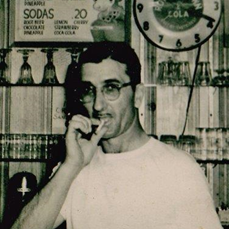
The Village of Cooksville had its own soda fountain and hamburger joint—both were in its very own snack shop.

Ed Ortman
From 1947 to 1958, the Ortman family operated the popular “Snack Shop” in Cooksville in a new little building constructed by Edward Ortman on the lot north of the historic Betsy Curtis House located just north of the General Store on State Highway 138.
Donna Ortman Clark, one of the Ortman’ daughters, remembers how the Snack Shop began:

“People were very skeptical, including some of our family when my father decided to start this business. My parents had sold the Cooksville grocery store earlier [to Miles Armstrong in 1946] because my father had been injured in an accident.  He was returning with a load of groceries which he had purchased at the wholesalers in Madison.  His panel truck was hit by a car that did not stop for a stop sign. It was said the scene resembled a tossed salad with salad dressing and produce all over the highway.  During the war and for a while after the war, because of manpower shortages, grocers had to pick up their own grocery stock.  A year later, Dad decided to build the Snack Shop.
“I was thirteen years old and my parents always needed help at the Snack Shop.  Because we were a large family, it was a family business.  I ‘enjoyed people’ more than cleaning house,” says Donna.

The Snack Shop was well-known throughout southern Wisconsin for great hamburgers and delicious malted milks.  Some customers liked raw hamburger—steak tartare—with just an onion and bun.  Donna remembers that her “Mother always kept an egg handy for our bread delivery man so that he could have an easy-over egg on his raw hamburger!”
“Norwegian coffee” was on the menu, made in a regular commercial coffee pot with a raw egg put into the coffee ground holder, and the customers loved it, according to Donna.

The Snack Shop had a large teenage following, with students from Stoughton, Evansville, Edgerton, Brooklyn and sometimes from Bellville and Footville high schools. Donna recalls “going to football games and at the end of the game hearing students say, ‘Are you going to Ortman’s?’  Sometimes Dad would just load the grill with hamburgers before the crowd appeared.”
Regular customers came from Madison, as well, and many said the Snack Shop had the best hamburgers between Madison and Janesville. “Cooksville was considered a neat place to take a Sunday afternoon ride to, so they would stop for ice cream….  Sometimes in the summer on a busy Sunday we would run out of ice cream,” says Donna.
Sharon Ortman

“One very busy Sunday sister Sharon and I were in the Snack Shop by ourselves for a few hours.  For some reason we wanted to make certain no one could come and rob us of the money we were taking in, so each one hundred dollars we made we would hide.  I think we took in a lot of money that day.  One day my brother Terry and Sharon were working.  Terry filled a car with gas and the customer took off without paying.  I think Terry did get the license plate and called the police.  The young man did pay for his gas! “
The Snack Shop had gas pumps out front and checked people’s automobile oil for them.

“My mother had taught school and loved young people and they loved her.  Once one of the high school girls put her gum in a bottle of ketchup.  Fortunately, mother saw her do it.  She went to her table and removed the ketchup bottle without saying a word.  The young lady was so embarrassed and couldn’t apologize enough.  Unfortunately, people seemed to chew gum a lot and it would end up placed on the underside of the table.  It was one of our most undesirable jobs—cleaning it off.”
Ortman Family, 2011, with Donna 3rd from right
The Ortman family lived just across the street in the historic Cooksville brick house known as the Collins House. In the 1940s they had a party telephone line and when the Snack Shop closed about 11 p.m., the family would know when the Snack Shop phone rang because all the phones on the party line would ring, and the Ortmans could answer it at home. If the caller asked if the Snack Shop was still open, the Ortman parents would say “yes” and run across the street to open up the Snack Shop for the bowling team or a square dancing group.  “My folks always wanted to accommodate everyone,” Donna says.

“I was a soda jerk. We had a soda fountain and made many soda drinks, ice cream sodas and floats and the best hot fudge sundaes.  Instead of mixing our hot fudge with water, as the recipe called for, my folks mixed it with milk. Back then the jukebox played a tune for a dime; hamburgers were a quarter; and cheeseburgers and malts, thirty cents.”
Eventually, the Snack Shop building was sold to Donna’s sister Sonia, who added an addition, making it into her first home.

Greg Armstrong, whose parents operated the Cooksville General Store for many years and lived in Cooksville, also has fond memories of the famous Snack Shop.
Greg recalls, “I went to the Cooksville School with the Ortman children. I still remember the {Snack Shop] bar with swivel stools with chrome bases and red plastic seat covers along the north wall. There was a row of tables along the South wall. I think the chairs had those bent, round wood-backs. I also fondly remember getting malted milk shakes there and marvelous hamburgers. The Snack Shop became a popular hang-out for the teenage and young adult crowd.

“I think another very fond memory is the souped-up old cars with glass-pack mufflers that sounded fabulous…..On Saturday nights (maybe it was Friday nights) there often were so many cars that they filled the parking lot and then were parked along Highway138. It was a jumpin’ joint…. I also seem to remember, although this one is a bit vague, that my brother Steve Armstrong wore his blue suede shoes down to the Snack Shop on their first outing. Mostly the clientele at the Snack Shop were older than I was. I thought those older bigger people were really cool.”  [Greg was about ten years old or so at the time.]
Even earlier, in the late 19th century, Cooksville had an ice-cream “shop” in the home of Electa Savage, who lived in the Benjamin Hoxie House and provided the community with fresh home-made ice cream frozen with ice from the mill pond on the Badfish Creek.

And later in the 20the century, after the Snack Shop closed, the General Store fulfilled Cooksville’s—and the surrounding area’s— need for soda pop, snacks, ice cream and happy times.

[Thanks to Donna Ortman Clark and Gregory Armstrong for sharing their memories with us.]

#   #   #

Monday, September 16, 2013

Cooksville Store Grand Opening

The Cooksville General Store has opened after about 1-1/2 years of inactivity. The new proprietor, Sue Ebbert, opened for business on Labor Day weekend. Sue also operates Simple Country Living near Fort Atkinson.
There will be a Grand Opening on September 28 and 29. Currently the Store is open Saturdays and Sunday 10-6, and it will be open Tuesday through Sunday, 10-6  after the Grand Opening.

Built in 1847 and located in the Cooksville Historic District, the historic Store may be the oldest General Store in Wisconsin.  The building is owned by the Masonic Lodge (Waukoma #90), which occupies the second floor; the Store occupies the first floor.
Sneak Preview August 14
The interior of the spacious first floor has been remodeled by Sue to meet her needs. The old shelving has been removed, new coolers have been added, and the store has restocked with fresh baking items, spices, homemade pies, locally grown produce and other specialty items.
“I’m excited about coming to Cooksville and re-opening the store,” Sue says. “ I’m offering a unique product mix and am looking forward to working with the Cooksville community to provide the entire area with a broad mix of items that aren’t available elsewhere, with the exception with my store near Fort Atkinson.
The community is eager to cooperate with Ms. Ebbert and assist in providing an exciting business addition to the historic Cooksville community.
For more information about the General Store contact:

Sue Ebbert at 262 707-4503 or 920 563-4469.

Wednesday, August 28, 2013

Cooksville’s Hank Bova Has Died


A. Henry Bova, “Hank,” died on August 23, 2013.  He was 77 years old and a longtime resident of Cooksville.  Hank, born in Dearborn, Michigan, was retired after 36 years as a Professor of French at Beloit College.  His partner, Maurice Gras, born in Draguignan, France, in 1928, was a retired Professor of French at the University of Wisconsin-Madison, and preceded Hank in death in 2003. Both were very active in Cooksville community organizations; Maurice had been president of the Cooksville Community Center, and Hank was a member of the Historic Cooksville Trust Board for 8 years and then an Honorary Board member for the past year. Both were active participants in the historic village activities.


Hank and Maurice purchased Cooksville’s historic Longbourne-Roberson House (built c.1854) in 1968, and restored and rehabilitated the house under the guidance of their friend and architect, Michael Saternus. The project included a new addition to the rear and a new garage, designed by Mike. Extensive landscaping of the property was also undertaken
Marvin Raney, local historian and antiquarian, wrote a history of the Longbourne-Robertson House up to 1968 as a gift for Hank and Maurice, and Hank wrote a continuation of the story in 2004, both of which are in the Cooksville Archives.
Hank’s story relates that he and Maurice had been searching for a rural residence halfway between Madison and Beloit and happened upon Cooksville, where, thanks to Marvin Raney, they discovered the Longbourne-Robertson House, then owned by Miles and Beth Armstrong, was for sale. The two were not impressed. As Hank wrote, “It did not appeal at first.”
Hank’s story continued: “After meeting with Michael Saternus, another friend of Marvin and a budding architect who convinced us that this was a beautiful house, full of promise, we contacted the owner, Miles Armstrong. We made a ridiculously low offer. To our considerable surprise, he accepted. Mike Saternus advised us to buy as much land as we could afford with the house and we did…. We moved in in March 1968…. We promised Mike Saternus to restore the front elevation of the house as closely as possible to the original….The new addition was completed in about November, 1974….The photographic portraits which hang in the stairwell are of Paul Savage and his sister, Avis. Paul… was a colorful personage. He became a folk hero in this house where legend has it that his ghost lingers.”

Hank and Maurice both became “legends” of their own, for accomplishments in their own time— in the restoration of their house, in their extensive gardens, in their beloved village’s activities, and in the gracious, fun-loving  and productive lives they lived—and for the wonderful, legendary meals that were cooked in their “French House.”

{Remembered by their friend, Larry Reed, who learned a lot about cooking, partying, and enjoying Cooksville from Hank and Maurice.]

Monday, July 29, 2013

Historic House Near Cooksville Available Free to Mover


If you would like a free historic house and can move it to a new location, you might be interested in the limestone Stebbins House, built 1850, near Cooksville in northwestern Rock County.
Built in the Federal-Greek Revival style, the old rural residence has been called one of the finest mid-19th century farmhouses in Rock County. It was the home of prominent Porter Township resident Harrison Stebbins in the 19th century, and in the mid-20th century an old and unusual heritage apple tree was discovered on the property and was named “Bonnie’s Best” Historic Cooksville Apple.
The Stebbins House is a solid, quarried -limestone structure with approximately 2400 square feet under the Federal-style roof with stone parapets, stepped-gables  and chimneys at each end. The five-bay residence has stone lintels above doors and windows and bulls-eye louvers in the gables of the attic.                       

            Stebbins House (1850), photo late 20th century.
Located near the historic Village of Cooksville, the house was listed in the National Register of Historic Places in 1980 as part of the greater Cooksville area’s historic and architectural heritage.
The Cooksville Historic District is well-known for its mid-19th century village architecture and history and has been called “a wee bit of New England in Wisconsin.”  Located along the banks of the Badfish Creek in the Town of Porter, the village has also been called “the town that time forgot.”
The historic house must be moved and re-located and is available free of charge. Several qualified lots in or near Cooksville are potentially available for purchase for its re-location, and a house-moving company has stated that the house can be easily moved.
Solidly constructed, the stone house retains much of its interior woodwork and other architectural details. The late 19th-century front porch has collapsed, the present wood-frame addition is not moveable, and, of course, the house will need rehabilitation.
The Stebbins House is available from the owner or through the Historic Cooksville Trust, Inc., a non-profit charity, which helps to preserve the area’s heritage. The Trust is cooperating with the owner to help coordinate the move and the relocation of the historic house.

For more information about the house, contact the owner Ted ­­­­at (608) 444-3951 or Larry Reed at (608) 873-5066.